Monday, 7 December 2009

Tutis? Balls.

I had been intending to forswear any more Tutis-bashing, but a combination of technical and medical difficulties have prevented me getting the images I was going to write about. So here are some more cheap shots at the world's most incompetent "publisher" of classics.

One artist Tutis has regularly ripped off, using his images for their covers, no matter the inappropriateness, is Luis Royo. Now, I loathe Royo--his stock in trade is hideous softcore paintings of Gothy warrior women with few or no clothes, often humping demons or monsters of some kind or other, invariably with their mascara running. Here are the covers of several of his books, to show you what I mean (click for bigger, if you dare).


Anyway, Tutis seem to have decided he's worth plundering for their covers. In a rare display of restraint, however, they seem to have only used those of his paintings which feature fully dressed men, rather than masturbating sorceresses. And of course, nothing says 'Jack London' or 'Balzac' better than space warriors or wizards.


That last book is also available in another edition. In an inspired spirit of literary crossover, it features small metal models of the Mad Hatter's tea party from Alice in Wonderland.


That's not the only Tutis title to try this kind of literary mash-up: who knew that Dorothy of Oz had met Charlotte Brontë?


What remains mystifying--among many other things--is that they don't just slap any old image on the cover. Sometimes they go out of their way to change the picture to fit different books. Not in any way that actually fits what the book is about, but still...


Still, they do have another edition of Kipling's Kim, and at least that one has a cover which recognises that, at heart, it's just a simple story about multicoloured zombies with Walkmen.


The madness doesn't end there, inevitably. Here are some more uniquely interpreted classics, kicking off with an anti-slavery novel (with added gun-toting blindfolded ballet dancers), and proceding via a biography of Chopin (not the pianist, but the guitar-playing, jeans-wearing folksinger) and a pirates (on bicycles) adventure, to the previously undiscovered fact that America's presidents actually run the country from a secret base on Easter Island.


Friday, 4 December 2009

Initials BBB

I'd been vaguely aware that this graphic novel called Bottomless Belly Button, by Dash Shaw, had come out and was being widely praised, but I didn't know anything else about it--the name suggested something twee and silly, so, fool that I was, I didn't try to find out more.

Then I looked at the beautiful book design work of Jacob Covey, and among the projects he'd worked on was Bottomless Belly Button--and it looked fascinating. So, having the self-control of a Skinner-box rat, I bought it. And it's a lovely, lovely thing.

I'm only partway through the 700+-page story, but I'm hooked (over six days, the three adult children of the Loony family, and their own families, visit their old family home to hear their parents announce that, after 40 years of marriage, they are getting divorced). But this is about the design, which is great. (For all images, click for bigger).

Printed in blue-black and white ink on a chipboard card cover, there are actually two different cover designs, one featuring each of the Loony parents. I got Mrs Loony.


The white ink is interesting, because on this background you can only really see it when the light hits it at an angle.


The interior is nicely done, too, printed in a brown ink, and featuring, among the comic panels, various letters, maps, diagrams and drawn photos. Shaw can write dialogue very well indeed, especially awkward romantic and family interactions...


..but he's also a master of observation and at visually rendering the way objects and the natural world behave, as in this sequence where a tired new mother attempts to get a fitted sheet onto a mattress.


If it continues being as good as it has been so far, I will have more on this book in a best-of-2009 post coming up.

Wednesday, 2 December 2009

Amazon Does Covers

I'm no big fan of Amazon, but I was interested to see them running a public vote on the best book covers of 2009 (here, although the link seems not to work half the time), which included a number of covers new to me. So here are some of those I hadn't seen before, which I also really like.


Design by Alison Forner for Padgett Powell's novel The Interrogative Mood


Design by Banksy


Design by Barbara de Wilde


Design by Ben Gibson


Design by Bunpei Yorifuji


Design by Carin Goldberg


Design by Mark Robinson


Design by Michael Bierut and Yve Ludwig of Pentagram


Design by Peter Mendelsund (who I interviewed here)


Design by Robert Frank and Gerhard Steidl, of Frank's Portfolio


Design by Scott Magoon, for Steve Jenkins' picture book

Monday, 30 November 2009

Best Books of the Year Part 1 [Not About Covers]

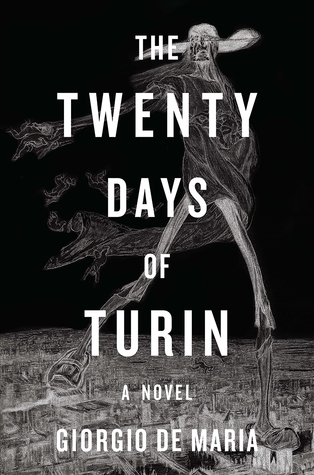
I'm going to continue to talk about covers and book design here, but over the month of December I'm also going to do a series of extra posts about the books I most enjoyed this year. There's no particular reason why anyone should care about these besides me, so feel free to skip them, but my hope is that some lesser-known but frankly excellent things will become a little better known if I bang on about them here. I should also note that many of these weren't even published in 2009--I just happened to read them this year--so this is going to be a bit of an eclectic mishmash. Anyway, here we go...

* * *

Sigizmund Krzhizhanovsky: Memories of the Future
NYRB, 2009


The seven strange, surreal and fantastic stories collected here were written in the 1920s, but given that Krzhizhanovsky was living in the Soviet Union, and given to a darkly satirical view of life, he wisely kept them hidden. Not published until decades after his death in 1950, they’re now available in English in Joanne Turnbull’s fine translation.

And they are some seriously peculiar and wonderful stories: the Eiffel Tower achieves self-awareness after having radio transmitters installed in its summit, goes on a rampage, and then commits suicide; humanity’s collective subconscious plots a revolution against the waking world; an apartment grows bigger and bigger, though apparently unchanged on the outside, dwarfing the increasingly paranoid occupant.

The highlight is the nearly 100-page title story, in which a man with a unique view of time and human perception tries to build a working time machine, while the forces of Russian history work to frustrate him. And then he succeeds, and visits the Soviet future, which is not represented in a way Stalin would have appreciated.


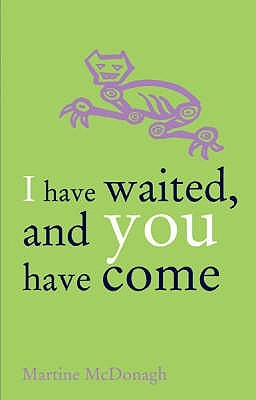
Martine McDonagh: I Have Waited, and You Have Come
Myriad Editions, 2006


Science fiction is often the characters who turn out to be the most important people in the story’s imagined world: they create the world-shattering invention, or lead the fight against some strange oppressor, or discover the truth behind the warped reality, or encounter the weird other, or are the rare survivors of some cataclysm who must build the world anew. But some science-fiction books (usually the ones frantically marketed as not being SF by their publishers) create a world, but then look at some ordinary lives being lived there (see Ken Kesey’s vastly underrated Sailor Song, or Harry Harrison’s Make Room! Make Room!).

McDonagh’s first novel is set in the middle of this century, in a global-warming-devastated Britain. Her heroine lives alone on the fringes of a small community in the Midlands, with much of the land around her flooded out and depopulated. But it’s not a John Wyndham-style tale of being a survivor, or at least not most significantly. Instead, it’s a story of sexual obsession and broken trust, with the sodden (and wonderfully rendered) landscape a constant, literally atmospheric presence.


Gyula Krúdy: Adventures of Sindbad
Central European University Press, 1998


In the unlikely event that somebody puts a gun to my head and tells me that I can only read the work of writers who flourished under the Austro-Hungarian Empire, I could probably live with that. There are so many who are so great, and they produced an extraordinary collection of brilliant novels and plays and stories and poems, birthed in the massively complex multi-cultural, multi-religious, multi-lingual humanistic pan-European society that was destroyed by the First World War.

One of Hungary’s greatest writers, Krúdy published this novel of short stories in 1911, shortly before everything went to hell, and it was translated into English by George Szirtes in 1998. It’s a strange and beautiful book about an aristocratic Hungarian going by the name of Sindbad, who’s either unmoored in time or else hundreds of years old, pursuing both women and Woman, all rendered in some deeply lush, dreamy prose.


William Hazlitt: Liber Amoris (The Book of Love)
The Hogarth Press, 1985 / Bookkake, 2008


Hazlitt was one of the great essayists of two centuries ago, and his reviews and articles are vivid and powerful today. This odd little book, published pseudonymously in 1823 (and available free here) , was an attempt to record, explain and exorcise a romantic/erotic obsession that almost destroyed him. In the midst of getting divorce, Hazlitt fell disastrously in love with his landlady’s daughter, Sarah Walker, on the basis of a little flirting, and was unable to accept that she wasn’t interested in him.


He collected together his letters to her, and to other friends, some of her notes to him, records of their conversations and arguments, and notes about his own feelings and behaviour. The result is a vivid and compelling portrayal of a ridiculous but unstoppable infatuation, presented with a weird mix of clarity and monomania. It also almost ruined his reputation.




Justin Evans: A Good and Happy Child
Three Rivers, 2008


I first mentioned this back here, as a book I was drawn to because of the cover. I’m glad I was, because it’s excellent: a deeply creepy look at madness, loneliness and demonic possession. A troubled man in a troubled marriage looks back at his unhappy childhood, when he made a special Friend. To say much more risks ruining the plot, but it’s very well done, and wears a lot of esoteric and fascinating research very lightly.


* * *

More to come...

Sunday, 29 November 2009

I Hope She Earned Enough from Her Crappy Movies to Afford a Bodyguard

After the beast-feeding book, I wondered what other horrors Authorhouse might have to offer. The answer is legion: vast numbers of inarticulate New Age screeds with 47-word titles, inept genre novels, and textbooks for audiences so tiny that even their authors aren't reading them. But one book stood out for several reasons:

  • the $122.99 pricetag,
  • the fact that the author's personality is so unstable that he can't even keep his own name consistent for the duration of a paragraph,
  • the author's insanely complex yet obviously delusional autobiographical claims,
  • the peculiar target of the author's obsession (B-movie actress Rebecca de Mornay),
  • the hideous, bathetic and deeply creepy poetry (much of it about de Mornay), and
  • a blurb the likes of which I have never seen.

This is the book. The front cover alone has few clues (the subject and the 'Sir' aside) to the madness to come.


This is the blurb, reprinted verbatim:
Soft love poetry, sonnets and ballads, combined with Stunning Photography. This Full Color collection is bound to be an enjoyable addition to your Poetry and Photography collection. Top quality Photo's of garden flowers as well as the Photo Collection of Rebecca De Mornay's personal Photographer and boyfriend. And for the first time ever in print, the real truth about their hidden life. Now you will have more to go on than printed lies, "If you are going to be known for all time for something, make sure it is the truth." Written first hand from the only man to ever date Rebecca De Mornay, Hollywood stuntman and actor Christopher Stewart, The Spy That Loved Her, and the truth about his classified life. The War On Drugs Revealed first hand, the imprisonment of Charlie Gotto, and how the Chicago Mob was changed, and the Cartels brought down. "If they kill me for this, at least it is printed, I don't fear death." USMC Force Recon/ CIA/ DEA/ Interpol Officer "Scarlet" "If I sell even one copy, you will pay me more than the Government did." "The only end to pain is to think of joy and forget it, That is why I write Love poetry."

Some of those poems (click for readable versions):


And finally, that author's note: Christopher Stewart is the star of Pentangle and South American Tiger Shark Black Pearls. He is the author of A Knight's Grotto. He is an actor and stunt man, trained in Ninjitsu martial arts in Japan. He worked in many films including, Predator, Enter The Ninja, Rage of Honor, The Park is mine, and Never say Never again, and the Master TV series. "My Hat is to you my friend Tom Cruise, for making it possible to see my Screen Test in Legend, I am Tic." A complete list of his work is included. "My work in film is hard to see, since I was between 13 and 19 in the roles, I was made to look older." The master Ninja "Hi, I'm the one you never saw!"He works for the Government, Badged by Interpol in 1978, NYPD Black Homicide 1982, CIA 1976 Hostage Resque, DEA 1978, Internal Security 1984, Presidential Security 1988. USMC Force Recon 1989. His last action was Desert Storm. He received the United Nations Congressional Medal Of Honor 1986, Silver Star 1991, Purple Heart with Cluster 1989, USMC Medal Of Honor 1989. He was Knighted By Queen Elizabeth II 1983 in England, and trained with the SAS. He was Born in NY in 1970. "For those fans that were there, I'm Steven Cooper of the Nightmare band, the Warm up band for Lita Ford Glenfalls NY Dangerous Curves Tour 1989 or 1990 I forget. I fence, Fight SCA Heavy Weapons, Martial arts, Paint, write, and study Geology and Archaeology."

So if Rebecca de Mornay doesn't have a bodyguard who can protect her from the romantic attentions of a rockin' ninja who was knighted at the age of 13 and "badged by Interpol" at the age of 8, it's about time she hired one.

PS: Amazon notes that, due to it being a special order book, it's already too late to order this as a Christmas gift. My apologies for not bringing it to your attention earlier.

Thursday, 26 November 2009

A Very Patient Dog

One of the design sites I've only recently encountered is It's Nice That, thanks to the fact that they commission art from the great Tom Gauld. They've just launched a limited-edition art book which looks great, and is based on one of those simple but great ideas I wish I could come up with.


A collaboration between illustrator Tom Edwards and designer/photographer Rob Matthews, Matthews explains it thus: "Taking a selection of Tom's drawings, I recreated them as photographs. This project plays on the idea of drawing from real life by turning it on its head." Click for bigger images.


As an aside, Rob Matthews has also printed Wikipedia as a book.

Wednesday, 25 November 2009

GOD BLESSING ME TO BEAST FEED MY BABIES


In the olden days the mad person with a message and idiosyncratic punctuation they desperately needed to share was usually reduced to using a photocopier, staples and handing stuff out on street corners. Now, for a mere hundreds of dollars, Authorhouse will take your message to the world.


A sample page (click to enlarge): bear in mind this thing is 648 pages long, and contains not one lower-case letter.


It's almost as bad as the stuff I have to edit at work.

Tuesday, 24 November 2009

"Classics"

I'm something of a sucker for series of "classic" books, so it was that word that first caught my eye about the Greenleaf Classics from the 1960s and 1970s. Of course, reading the cover blurbs and titles, it quickly became apparent that the word was used so loosely (as in bowels) as to be utterly meaningless, but for a short while I thought I had at least discovered a forgotten source of intriguing cover illustrations that might not have looked out of place on Penguins of the same era...


 A very short while, as it turned out, as this is the sort of thing that seems more typical of their output:


To be fair, those are actually quite witty for a sleaze publisher. More typical of Greenleaf's output are these things:


Oh, those sexy saucer people. Sorry, I was confused.


Yes. Yes, it does.

Even these are positively artistic masterpieces compared to later Greenleaf books, which tended to be called straightforward things like Horny Aunt, and have a tatty softcore photo on the front.

In tracking down these covers, I also discovered a previously unknown (to me) field of exploitation pulp: the Vietnam War pornographic paperback. In retrospect, I should guessed there'd be such a thing--the whole men-in-uniform/sex/violence/war-crimes/brutality/Asian-women-fetish nexus must have been too big a market to ignore.


Sunday, 22 November 2009

Ellroy, Good and Bad

I have to thank sharp-eyed reader Ian Rogers for drawing the following to my attention: the atmospheric, eye-catching and vivid new James Ellroy cover from the US (it's a Knopf, so possibly a Chip Kidd design?)...


..and the rather ugly UK equivalent, which has no credited designer, and which on first glance appears to be a beanbag eating a man's arm on TV.


That could have been an effective image, if it had full-bleed to the edges of the cover, but something has gone awfully wrong.

Thursday, 19 November 2009

Going Mad in Someone Else's Language

I came across these two covers here, and they grabbed my attention.


They appear to be Hebrew translations of John Wyndham's The Day of the Triffids, and Isaac Asimov's I, Robot. The publisher is Laika, according to a couple of helpful Hebrew readers I contacted, and written thus: לייקה. Beyond that, though, I'm stumped, as I can't find any such publishing house online, nor these editions of these books, and so have no idea when they came out, who did the playful covers, or if there are any more in the series. I hope there are, because I really like these. Anyone out there know any more?

Seasickness

In January I posted about the first three Four Corners Familiars--classic books illustrated and redesigned by contemporary artists (but, importantly, with the texts unchanged), such as The Picture of Dorian Gray in the format of a 1970s men's fashion magazine, or an edition of Dracula which mimics the look of the first edition, but with new, disquieting illustrations and careful, inventive typography.


Just last night I bought my copy of the newest in this series, Nau Sea Sea Sick, a collection of short stories about the sea. The artist behind this one is Kay Rosen, whose area of interest is text and language.


As you can see, the cover makes the book look as though it's made of wood, though the pattern is actually meticulously hand-drawn.The internal design is unusual: the text is printed only on one side of each signature, which remains uncut. Like this:


Rosen's own text artwork adorns the stories--words from the text drawn backwards and forwards over the page from one another.


As for what the art means, well, I have no idea. But I like the effect. Nau Sea Sea Sick is a very pleasing object, as well as containing a number of ace stories (such as Stephen Crane, Katherine Mansfield, John Moore, and non-fiction from Isabella Bird, plus more) which is the whole point of this series.


Next up from Four Corners Familiars are a collection of stories by Jane Bowles and Denton Welch, with art from Colter Jacobsen, and then Anthony Hope's The Prisoner of Zenda, with art by Mireille Fauchon, which I'm particularly looking forward to.

(Click all pictures for much larger versions.)

Monday, 16 November 2009

Attaching a Huge Engine to the Creative Process: an Interview with Tomer Hanuka


Israel-born and New York-based Tomer Hanuka is one of the most exciting young illustrators and designers working in the field today. He has been nominated for numerous awards in the comics (the Ignatz, Eisner and Harvey awards), design/illustration (Society of Illustrators gold and silver medals, Society of Publication Designers silver medal) and cinema fields (Tomer was part of the team which created Oscar-nominated animated movie Waltz with Bashir).


A collection of Tomer's comic short stories, book design by Kobi Franco


Most significantly for my purposes, Tomer has designed a wide selection of great book covers, as well as designing his own comics and graphic novels (much of which he creates with his twin brother, Asaf Hanuka).


An issue of the Hanuka brothers' comic, Bipolar


Tomer was kind enough to agree to be interviewed about how he goes about his book design work. Click any image for a larger version.


* * *

CAUSTIC COVER CRITIC: You work in design, illustration, comics, movies... Do you have a favourite field, or is the broad mix itself the best part of your work? Were comics your first love?


TOMER HANUKA: Yes, comics were absolutely my first love, and in many ways my gateway drug. It’s the place were imagination got fused with two-dimensional interpretations on printed matter. These days when I take a project on it's because I'm excited about it, so it's really the actual project I'm after, rather than the medium. Book covers have a high percentage of ending up being positive experiences. I love the process of distilling a certain quality in the narrative into a single image and the books I get to do usually have powerful narratives—it’s like attaching a huge engine to the creative process.


CCC: What media do you use to create your illustrations? Is it pencil, ink and digital colour? Or do you work completely digitally for the final artwork?

TOMER HANUKA: I draw with pencil and ink/brush, then scan. And colour digitally. The final image is a file.


CCC: Most book covers use stock photos without clear images of faces, whereas your book covers feature detailed illustrations of the protagonists. How much time do you usually get to read and absorb the books before going to work on them?


TOMER HANUKA: Usually about three weeks. I make a point of reading the books; it makes a huge difference for me in terms of getting into a certain frame of mind beyond the facts and plot points. There is a texture and rhythm to writing that you can't get from the Amazon blurb. Listening closely to that unique voice can lead to interesting visual directions.


Above: The heroine of these novels is a Turkish drag queen with an Audrey Hepburn fixation.
Below: The process behind the cover for The Gigolo Murder


CCC: Your beautiful de Sade cover for the Penguin Graphic Classics series is one of my favourites from that range—how did you come to work on that book?


TOMER HANUKA: Paul Buckley, the fantastic art director of this series, was kind enough to commission me.


CCC: What are you working on now?

TOMER HANUKA: Beyond commissioned projects I am slowly putting together a graphic novel with my brother Asaf, and writer Boaz Lavie.


CCC: If you could design, inside and out, without budget limitations, any book from the history of literature, what would it be?

TOMER HANUKA: I want to say the Old Testament, but the Kafka library would be just as satisfying. You know what? Give me the Nabokov library and we're good.


CCC: Is there any neglected book you'd love to draw to people's attention as something they should seek out?

TOMER HANUKA: Journey by Moonlight, written by Antal Szerb

CCC: Thank you, Mr Hanuka!

TOMER HANUKA: Thank you, James.


Tomer's artwork come alive in Waltz with Bashir


Dodie Smith: sketches by Asaf, inks and colours by Tomer

The film stills, Dodie Smith artwork and all background sketches are taken from the Haukas' wonderful blog, Tropical Toxic. And he's right--Antal Szerb is wonderful.

Thursday, 12 November 2009

Ink on the Skin

[Note: I have been asked by Penguin US to remove two of these covers, which I have done, as the images I was displaying were far from the finished work. Sorry for jumping the gun! I hope to be able to show them closer to the books' publication dates.]

In August I posted the first two covers for the forthcoming Penguin Ink series, which Penguin US is putting out in June next year as part of their 75th anniversary celebrations (Penguin is milking these Big Number anniversaries a lot recently--it's the 60th or 70th or 75th anniversary of one arm of the company somewhere in the world all the time these days, it seems).

Now I've managed to get the other four covers from the series (though one is incomplete). As well as Coetzee and Foster Wallace (see that first post), we have...


[Removed because not final image]
..Ian Fleming, cover by Chris Garver ...


..Martin Amis, cover by Bert Krak (click for bigger)...


..Helen Fielding, cover by poster artist Tara McPherson...

 [Removed because not final image]
..and Keri Hulme, with an appropriately Maori-inspired cover by NZ-based Pepa Heller.

These covers were commissioned by the great Paul Buckley, a VP Executive Creative Director at Penguin US. The Money cover was stolen from his flickr page. Buckley has also been busy producing another of those beautiful volumes which commemorate Penguin's design history. This one, Penguin 75, looks at 75 covers, with commentary from those involved in their creation. Due out at the same time as the Penguin Ink books, it has no cover yet, but here's one of the internal page spreads (click for a bigger look).


Finally, here are the covers of the two collections of work by Tara McPherson, most of which is distinctly more disquieting than her Bridget Jones cover.


Tuesday, 10 November 2009

Technical Difficulties


Due to a certain bastard telecom company, I'm having extreme net connection difficulties at the moment, so I apologise for the lack of updates. Flesh willing, broadband weak, all that sort of thing. Even uploading these two pictures took five six seven tries. To tide you over, a couple more Highsmiths. I hope to be back properly soon.


Thursday, 5 November 2009

This Damned Necklace Won't Stay On

When one arm of a publishing concern hasn't been paying close enough attention to another...


The photos are by Martin Scott-Jupp (and this is no criticism of his work, which I really like). And here she is again!